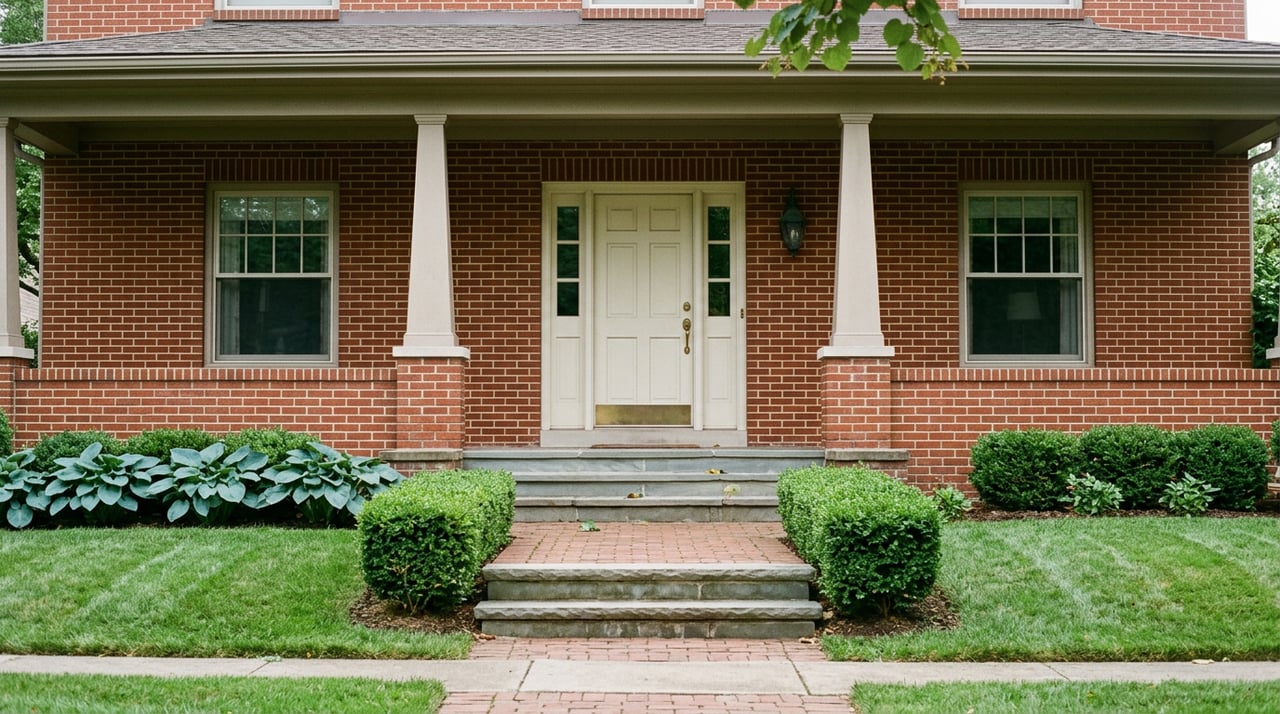
The call almost never comes from the home inspector. It comes from the loan officer, three or four weeks after the offer is accepted, and it starts with some version of "we have a problem with the wiring."
That sequence catches buyers off guard in Madison's classic old-house pockets more than any single line item on an inspection report. If you're circling a listing in Vilas, Tenney-Lapham, Dudgeon-Monroe, Nakoma, Greenbush, University Heights, or the Marquette and Schenk-Atwood blocks on the near east side, the age of the house isn't the risk. The risk is that the three things that can actually derail your purchase all show up in a different order than most buyers expect, and none of them are on the inspector's checklist.
The Inspection Passes. The Underwriter Doesn't.
Knob-and-tube wiring is not, on its own, a defect that fails a Wisconsin home inspection. It was standard practice into the 1940s, and a system that has never been buried under blown-in insulation or spliced with modern Romex can sit there for decades without causing a problem. Inspectors note it. They rarely flag it as disqualifying.
Insurers see it differently. Many standard carriers decline to write a policy at all when knob-and-tube is present throughout a home, and the specialty carriers who will take it on typically charge significantly more than a comparable rewired property. Some insurers issue a policy on the condition that the wiring gets replaced within 30, 60, or 90 days, which means a buyer can close, move in, and still be racing a clock they didn't know existed. The failure point isn't the walkthrough. It's the underwriting review that happens after your offer is already signed and your inspection contingency has already closed.
For a bungalow on Jenifer Street or a Prairie-style two-flat off Johnson Street, this is not a hypothetical. Homes in this age bracket across Madison's near east and near west side neighborhoods were built well before 1940, and partial rewires are common: a homeowner updates the kitchen circuit and the basement panel, then ties the new work into the original knob-and-tube instead of finishing the job. The house looks modern where you can see it and stays original where you can't.
If It's a Designated District, the City Has an Opinion Before You Do
There's a second layer that has nothing to do with wiring and everything to do with address. Madison has five officially designated local historic districts: Mansion Hill, Third Lake Ridge, University Heights, First Settlement, and Marquette Bungalows. If the house you're considering sits inside one of these boundaries, any exterior change, a new roof, replacement windows, a rebuilt porch, an added dormer, requires a Certificate of Approval from the Madison Landmarks Commission before you can even apply for a building permit.
This isn't the same as ordinary city permitting, and it isn't optional based on how visible the change is from the street. It's a separate review layer that exists specifically because the property carries a local historic designation, and it applies whether you're planning work in year one or year ten. Buyers who assume "old neighborhood" and "historic district" mean the same thing are often surprised to learn that plenty of century-old homes in Vilas or Dudgeon-Monroe sit outside any of the five official districts and carry no such requirement, while a home a few blocks over inside Third Lake Ridge or Marquette Bungalows does.
The fix is simple and takes five minutes before you write an offer: ask whether the parcel carries a historic district designation, not whether the neighborhood feels historic.
Two Different Ten-Day Clocks, Running in Two Different Directions
The third friction point is procedural, and it's the one most likely to get miscounted because two separate ten-day windows apply to the same transaction and they don't start at the same moment.
| Wisconsin Real Estate Condition Report (Chapter 709) | Federal lead-based paint disclosure (homes built before 1978) | |
|---|---|---|
| When the 10 days start | After the seller accepts your offer | Before you become contractually obligated to buy |
| What the seller owes you | A completed condition report | Any known LBP reports, an EPA-approved pamphlet, and a signed Addendum S |
| What happens if it's missed | You may have the right to rescind the contract | The purchase agreement isn't properly finalized without it |
Under Wisconsin Statutes Chapter 709, the Real Estate Condition Report is due to the buyer within 10 days after the seller accepts an offer, and if it doesn't arrive on time, the buyer can have grounds to walk. The federal lead-paint rule works in the opposite direction. For any home built before 1978, which describes nearly every property in these Madison neighborhoods, the seller has to give you a 10-day opportunity to test for lead-based paint before you're locked into the contract, not after. Wisconsin's version of this requirement lives in Addendum S, and it has to be handled ahead of signing, not tucked in with the rest of the closing paperwork.
Mixing up which window runs before signing and which one runs after acceptance is a common way for a buyer or a for-sale-by-owner seller to lose a rescission right they didn't realize they had, or to think they've satisfied a disclosure requirement they haven't. Nolo's guide to Wisconsin seller disclosures lays out the state statute clearly, but the two clocks are easy to conflate even when you're reading them correctly, because most contract paperwork doesn't visually separate them.
What To Confirm Before You Write the Offer
If you're seriously considering a pre-1940s home in one of these neighborhoods, the order of operations matters more than the order most buyers use:
- Ask directly whether the wiring has been fully replaced or only partially updated. "New panel" is not the same claim as "no knob-and-tube remaining."
- Talk to your lender about knob-and-tube before you're 20 days into a 30-day close, not after an insurance quote comes back denied.
- Check the parcel against Madison's five local historic districts, not just the neighborhood's reputation for old homes.
- If any original wiring remains, get a licensed electrician's inspection of that system specifically, separate from your general home inspection, before you go in front of an insurance underwriter.
- Confirm the timing on both disclosure clocks in writing: the Real Estate Condition Report within 10 days of acceptance, and the lead-paint packet before you sign.
None of this is a reason to walk away from a Craftsman on Spooner Street or a Foursquare near Tenney Park. It's a reason to run the paperwork in the right order.
I've walked buyers through closings on both sides of the isthmus, from two-flats near Breese Stevens Field to bungalows within a few blocks of the Henry Vilas Zoo, and the deals that stay on track are the ones where the wiring, the district status, and the disclosure timeline all get checked in week one, not discovered in week four.
Frequently Asked Questions
Does every old home in these neighborhoods sit inside a historic district? No. Vilas, Dudgeon-Monroe, Nakoma, and much of Tenney-Lapham contain plenty of pre-1940 housing stock that carries no local historic designation at all. The Certificate of Approval requirement applies only within the five officially mapped districts: Mansion Hill, Third Lake Ridge, University Heights, First Settlement, and Marquette Bungalows.
Is knob-and-tube wiring automatically a dealbreaker? Not automatically. If only part of the home retains the original system, a licensed electrician can sometimes confirm that replacing just those sections satisfies an insurer, rather than requiring a full-house rewire. The point is to get that answer before you're relying on a specific closing date.
What if I don't know the exact year the house was built? Treat it as pre-1978 until you can prove otherwise with permit records or an assessor's file. Sellers who complete the lead-paint packet regardless of a confirmed build year avoid a much harder argument later about whether the disclosure should have applied.
If you're weighing a purchase in one of Madison's older neighborhoods and want someone who will run these three checks before you're emotionally attached to a listing, Mary Ramsey has spent years walking Dane County buyers through exactly this kind of paperwork. Schedule a consultation before you write the offer, not after the underwriter calls.
