"Do we really need minimum lot sizes of 7,600 square feet?" That question came from Andy Cross, the planning consultant leading Waunakee's 2040 Comprehensive Plan update, out loud in front of the village's own Plan Commission this past December. He wasn't complaining about a builder cutting corners. He was pointing at the village's own 1990s-era zoning code and asking whether it still matches how Waunakee actually builds homes.
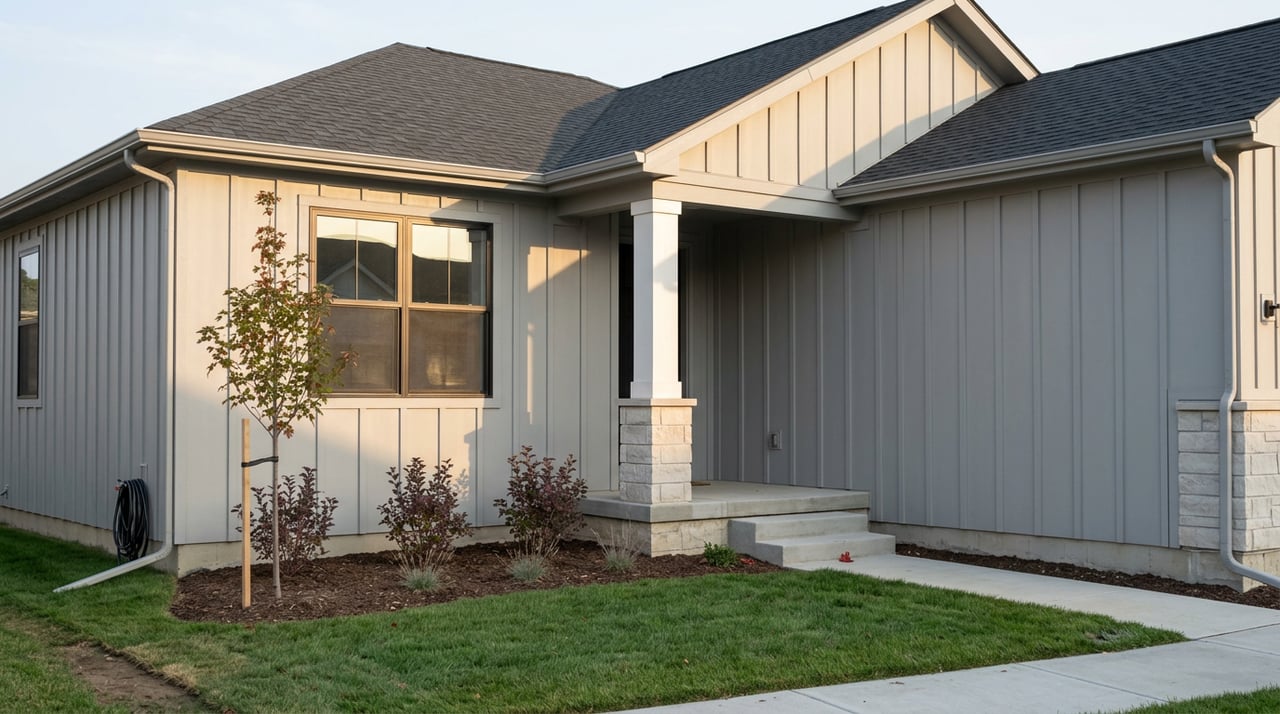
It's a fair question, because the numbers on the ground already answered it. Walk a newly platted street in Kilkenny Farms West or Westview Meadows and you'll notice the yards are tighter than what you'd find in a subdivision from ten years ago. That's not a coincidence, and it's not really about builders skimping. It's the visible result of a math problem the village published itself, one that changes how a new-construction home in Waunakee should be compared against a resale.
The Growth Math Behind The Shrinking Yards
Waunakee has been growing faster than almost anywhere else in the region. Between 2000 and 2020, Dane County's population grew at roughly 1.5% annually, itself a strong pace by state standards. Waunakee outran it at 2.6%. The village's most recent housing report, covering 2025 permits and platting activity, projects the village will need 2,386 additional housing units by 2040, close to 159 per year, with roughly 103 of those as detached single-family homes annually if the current housing mix holds.
That target sits awkwardly next to a zoning code still built around minimum lot sizes designed for a much slower-growing village. Add rising construction costs since the pandemic and a workforce mismatch the village's own Housing Task Force flagged directly: four out of five people who work inside Waunakee commute in from somewhere else, because the housing stock inside village limits doesn't fit most of their budgets. The task force's own operating principle was blunt: people who work in the village should be able to live in the village.
Something had to give, and it wasn't the growth targets. It was the lot lines.
Why A 2026 Subdivision Doesn't Look Like A 2014 One
Waunakee is still a village of detached homes. Sixty-five percent of its housing units are single-unit detached structures, though that share has slipped 3.3 percentage points since 2014 as more multifamily product has entered the mix. The 2025 permit record makes the shift concrete: 90 single-family permits, 13 duplex permits, 75 new market-rate apartment units delivered at Woodland Crest, and 19 new lots or parcels carved out of fresh subdivision plats.
The village's own housing report is candid about the mechanism behind those smaller single-family lots. Subdivision plats approved since the Great Recession have generally averaged near or below 0.3 acres, a deliberate affordability lever rather than an accident of available land. One builder cited in the village's planning discussion, Veridian, is building on very small lots with correspondingly small homes specifically to hit a price point people could still afford.
You can see the shift inside a single recognizable name. Southbridge, the enclave known locally for its earlier "Parade of Homes" showcase, has an original phase with the larger, hilltop-view lots that made it a luxury address in the first place. Its newer addition, marketed as Southbridge/Tierney, sits on the tighter footprint that's become standard across the village's newer plats, alongside Heritage Hills, Westbridge Park, MeadowBrook, and North Ridge Estates.
| Established phases (built roughly 2005 to 2015) | Newer plats (platted after the Great Recession) | |
|---|---|---|
| Typical lot size | 0.4 acre and up, often on hilltop parcels | At or below 0.3 acre |
| HOA covenants | Present but generally older and less prescriptive | Standard, often governing setbacks, fences, and outbuildings |
| Example addresses | Southbridge's original phase, North Ridge Estates | Kilkenny Farms West, Heritage Hills, Westbridge Park, MeadowBrook, Southbridge/Tierney |
| Village fee exposure | Paid years ago, already folded into today's resale price | Paid fresh at the building permit stage, stacked onto today's purchase price |
That last row is the part most buyers never see coming.
The Fee Line Nobody Photographs At The Model Home
Every new single-family building permit in Waunakee requires payment of park facilities and community center impact fees before the village will issue the permit. The village's own fee modeling in its most recent housing report estimates the combined village fee load at close to $4,887 per unit in a typical hypothetical subdivision. That figure doesn't show up in a builder's glossy price sheet or a model home walkthrough. It gets folded into the closing costs, and it's a charge a resale buyer simply never pays, because the home they're buying already cleared that hurdle when it was first built.
This is the piece that changes the new-construction-versus-resale conversation. A new home in Kilkenny Farms West or Heritage Hills isn't just competing against an established street on square footage and finishes. It's carrying a real, quantifiable village cost that an equivalent resale home down the road already absorbed and priced in long ago.
"People who work in the village should be able to live in the village."
That's the principle Waunakee's own Housing Task Force set as a goal. It's also the tension sitting underneath every new subdivision plat: keep lots small enough and fees predictable enough that new construction still pencils out for the workforce the village says it wants to house.
Comparing A New Plat To An Established Street, Lot For Lot
If you're weighing a model home in one of Waunakee's newer subdivisions against a resale on an established street, the comparison isn't really new versus old. It's asking which set of costs and constraints you're willing to live with. A few things worth pulling before you get attached to either option:
- Ask for the platted lot square footage, not just the acreage rounded up. A "0.28 acre lot" reads differently once you've walked it next to a 0.4 acre lot on an older street.
- Request the covenant document for the specific subdivision, not a generic HOA summary. Newer Waunakee plats commonly restrict fences, outbuildings, and even shed placement in ways older streets never addressed.
- Ask your builder or agent to itemize village impact fees separately from the base price. These are due before the permit is issued and they belong in your total cost comparison against a resale.
- Look at where the subdivision sits relative to Waunakee Village Park, the Village Center, and the trail network, since park-connected design has been a stated priority in recent plats and it affects daily livability more than square footage does.
- Check whether the specific phase you're touring is an original section or a newer addition, the way Southbridge's own history shows. The same subdivision name can carry two very different lot patterns.
None of this makes new construction the wrong choice. It just means the sales pitch (customizable finishes, no deferred maintenance) needs to be weighed against a real cost and space tradeoff that a decade-old subdivision doesn't carry.
A Few Questions Worth Asking Before You Tour
Is a smaller lot in a new Waunakee subdivision automatically a downside? Not necessarily. Less yard means less maintenance, and for buyers prioritizing simplicity over square footage, that's a fair trade. It's worth knowing it's a trade before you sign, rather than assuming every new subdivision offers the same space as an older one.
Do all of Waunakee's newer subdivisions have an HOA? Most do, and the covenants are typically more detailed than what you'd find in an established neighborhood platted before the 2000s. Get the actual document, not a verbal summary.
Will lot sizes go back up as the village updates its 2040 plan? That's an open question the Plan Commission is actively working through as part of the comprehensive plan update. Whether the 7,600-square-foot minimum stays, shrinks further, or gets replaced with something else will shape what "new construction" looks like in Waunakee for the next decade.
Comparing a new build to a resale in Waunakee right now means comparing two different cost structures, not just two different ages of home. If you want help running that comparison against a specific subdivision or a specific street, Mary Ramsey can walk through the actual numbers with you. Schedule a consultation and get a clear read on what you're really paying for before you commit to either one.
