Looking at commercial and mixed-use property opportunities in Portage can feel exciting and a little tricky at the same time. You want a property that fits the local market, supports steady demand, and gives you room to grow without overreaching in a smaller city. This guide will help you understand what types of properties make the most sense in Portage, what local demand drivers matter, and how to evaluate a building before you make a move. Let’s dive in.
Why Portage stands out
Portage offers a practical setting for small commercial and mixed-use investments. The city’s zoning code includes several business districts, including B-1 Neighborhood Business, B-2 Downtown, B-3 Interchange Business, and B-4 General Business, which creates different opportunities depending on your goals.
For many buyers, the most interesting options are in and around downtown. The B-2 Downtown District is intended for a broad range of uses, along with high-intensity redevelopment and infill that supports continued downtown viability. That makes downtown storefronts, small offices, and upper-level residential-over-retail buildings especially relevant in this market.
Best property types in Portage
Downtown storefronts
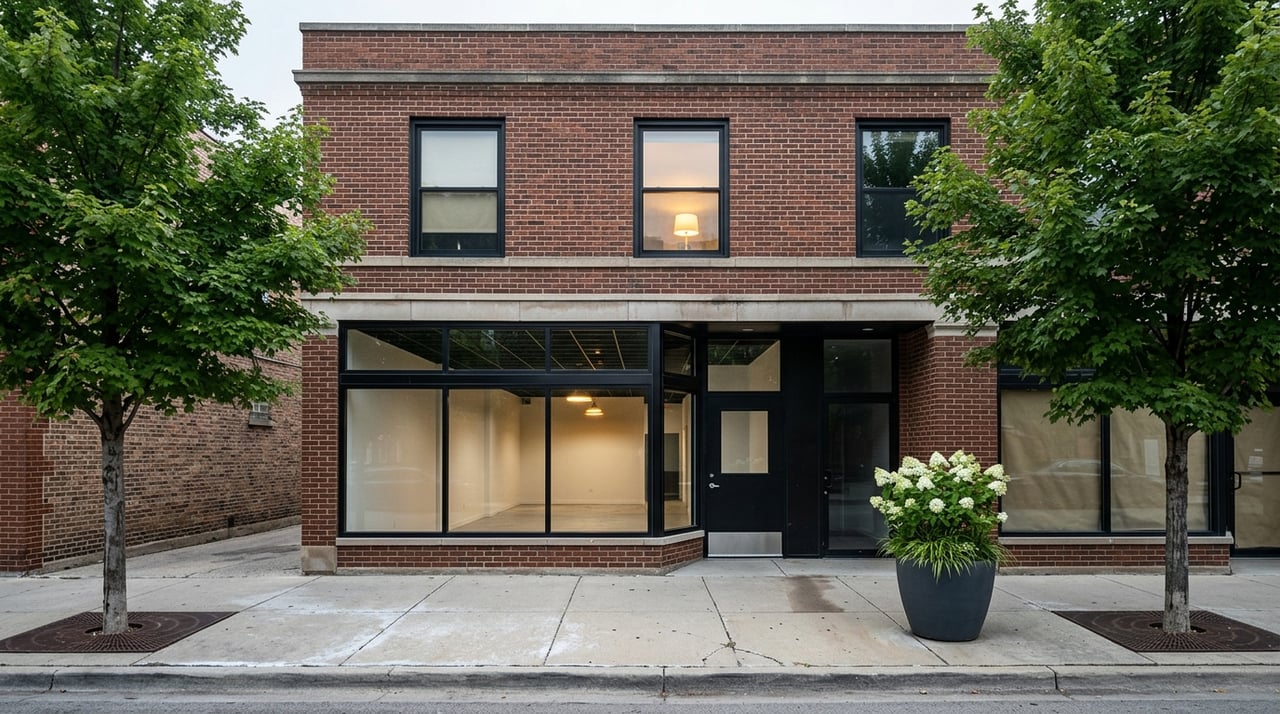
If you are looking for a small commercial entry point, a downtown storefront may be one of the strongest fits. Portage’s chamber directory shows a business mix that includes accountants, attorneys, insurance agencies, title services, real estate services, coffee shops, restaurants, jewelry, photography, wellness businesses, transportation services, and gift or shopping businesses.
That local mix suggests the market favors smaller, service-oriented spaces instead of large-format retail. In practical terms, that can mean a better fit for boutique retail, personal services, office users, or a business that depends on visibility and regular local traffic.
Small office suites
Small office properties can also make sense in Portage, especially for professional and service users. Columbia County’s employment mix shows manufacturing as the largest industry, but professional and business services had the fastest five-year growth from 2018 to 2023, rising 37.7%.
That growth does not automatically mean every office property is a great buy. It does suggest there is real support for modest office footprints tied to local business needs, especially in a city where flexible space and reasonable overhead matter.
Mixed-use buildings
Mixed-use properties deserve close attention if you want more than one income stream. Portage defines a mixed-use structure as a building containing both nonresidential and residential uses, which fits the classic downtown model of a storefront or office on the main level with living space above.
In a market like Portage, this type of building can offer flexibility. A residential component may help support overall income potential while the commercial space serves a tenant type that fits the downtown business mix.
Adaptive reuse opportunities
Portage’s Retail Historic District adds another layer of opportunity. The district preserves a concentration of late-19th- and early-20th-century commercial buildings and reflects the retail businesses, small industries, professions, and crafts that shaped the city’s main retail center.
For you as a buyer, that can translate into older two-story commercial buildings, live-work possibilities, and adaptive-reuse candidates. These properties may appeal if you value character, visibility, and the chance to reposition a building for modern use.
What demand looks like locally
Portage is a smaller market, and that should shape your expectations. The city had an estimated population of 9,975 in 2024, with 4,132 households, a median household income of $64,722, and median gross rent of $1,008.
Those numbers point to a market where value-conscious pricing matters. Whether you are evaluating retail rent, office rent, or the residential side of a mixed-use building, smaller footprints and practical layouts are often better aligned with local demand.
The broader county also matters. Columbia County had an estimated 57,979 residents in 2023 and a median household income of $85,351, which suggests buying power beyond the city core.
That wider trade area can support well-located small commercial properties, especially those that serve everyday needs or attract customers from outside downtown. It also helps explain why service retail, flexible office space, and modest mixed-use buildings may perform better than concepts that depend on rapid local population growth.
Why careful underwriting matters
A smart Portage investment usually starts with realistic assumptions. Columbia County’s unemployment rate was 3.1% in April 2026, which points to a relatively tight labor market rather than a distressed one.
That is a positive signal, but it does not remove the need for caution. The county profile also reports that Columbia County declined from 58,490 residents in 2020 to 57,979 in 2023 and projects continued decline through 2050.
For you, that means it is wise to underwrite for stability, not aggressive growth. Smaller spaces, flexible layouts, and tenants tied to daily services, hospitality, and regional traffic may offer a more grounded strategy than a property that needs major population expansion to succeed.
How to assess vacancy and income potential
Think block by block
In Portage, vacancy analysis should be local and specific. A citywide vacancy number will not tell you nearly as much as what is happening on the exact block, nearby corners, and adjacent storefronts.
The city’s downtown Business Improvement District is a helpful signal here. It has taxing authority for promotion and maintenance, and the city also offers a façade improvement loan program for B-1 through B-4 business properties and chamber members.
Those details suggest that reinvestment, storefront appearance, and business turnover are active local concerns. When you assess a property, it helps to look closely at surrounding occupancy, curb appeal, and the condition of neighboring buildings.
Use local income benchmarks
Generic metro assumptions can miss the mark in a small market. Portage’s median gross rent of $1,008 provides a useful residential benchmark, while the county’s higher median household income gives context for the broader customer base.
That combination supports a practical income strategy. In many cases, the strongest opportunities may be modest storefronts, service-oriented office suites, and mixed-use buildings with residential units priced to match the local market.
Watch for foot traffic signals
Downtown activity matters more than many buyers realize. Commerce Plaza at 303 West Wisconsin Street hosts the Portage Farmers Market from May through October on Thursdays from noon to 5 p.m.
Recurring events like that can support visibility for nearby storefronts, cafés, and mixed-use properties that benefit from street activity. If you are comparing two locations, a building near recurring public activity may deserve extra attention.
Location and access advantages
A commercial property is not just a building. In Portage, access and visibility can expand your reach beyond one block or one neighborhood.
The city highlights its location on I-39 and I-90/94, along with state highways 51, 33, and 16. It also notes rail-served sites in the industrial park, a nearby municipal airport, and city taxi service.
For an owner-user or investor, these transportation links can matter almost as much as the property itself. They can help support businesses that rely on regional customers, commuting employees, or convenient connections across the area.
Due diligence steps before you buy
Confirm zoning first
Before you get too far into pricing or renovation plans, confirm the zoning district. Portage makes its zoning ordinance and zoning map publicly available, and the city requires a zoning permit before land or buildings in the business districts are occupied or used.
This is one of the most important early steps because a property that looks right on the surface may not fit your intended use. You should verify the zoning classification, permitted use, parking standards, signage rules, and any approval requirements.
Review parcel and tax records
Columbia County maintains land information and parcel or tax search resources. These records can help you verify basic property details and support a more informed review before you commit.
For a buyer, this step can help uncover details that affect value, operating costs, or future planning. It is one of the simplest ways to reduce surprises later in the process.
Check historic and façade considerations
If a property sits in or near the Retail Historic District, you should review whether historic-preservation or façade-review issues may apply. Older downtown buildings can offer charm and flexibility, but they may also come with extra review considerations when you plan updates.
That does not mean you should avoid them. It simply means you should factor building condition, design constraints, and improvement costs into your decision from the start.
Compare nearby tenant types
One of the best Portage-specific research methods is to compare your proposed use to existing local tenant categories. Review the downtown BID context and chamber directory, then study how your property fits into the current mix of office, retail, service, and hospitality uses.
In a small market, tenant compatibility matters. A property is often stronger when it fits naturally with how people already use the downtown area.
What makes a strong opportunity
In Portage, strong commercial and mixed-use opportunities tend to share a few traits. They are usually appropriately sized for a smaller market, flexible enough for service-oriented or office users, and positioned to benefit from downtown visibility or regional access.
The best fits are often not the biggest buildings. They are the properties that align with local demand, realistic rent levels, and the kinds of tenants already active in the city.
If you are considering a storefront, a small office, or a mixed-use building in Portage, local knowledge matters. Working with a broker who understands Portage’s zoning, downtown dynamics, and small-market pricing can help you evaluate opportunities with more confidence. When you are ready to explore your options, connect with Mary Ramsey for knowledgeable, hands-on guidance.
FAQs
What types of commercial properties are most common in Portage?
- In Portage, the most practical small commercial options are often downtown storefronts, small office suites, and mixed-use buildings with commercial space below and residential space above.
What does mixed-use mean for a Portage property buyer?
- In Portage, a mixed-use structure is defined as a building with both nonresidential and residential uses, such as a main-level storefront with an upstairs apartment.
Why is downtown Portage important for mixed-use opportunities?
- Downtown Portage is important because the B-2 Downtown District is intended for a broad range of uses, redevelopment, and infill that supports long-term downtown viability.
How should you evaluate commercial vacancy in Portage?
- In Portage, vacancy should be reviewed block by block by looking at nearby storefront occupancy, surrounding property condition, and local reinvestment signals rather than relying on one citywide percentage.
What local factors affect income potential for Portage commercial property?
- Important Portage factors include the city’s smaller population, local rent benchmarks, county income levels, nearby tenant mix, recurring downtown activity, and regional access from major highways.
What should you verify before buying a mixed-use building in Portage?
- Before buying in Portage, you should verify zoning, permitted use, parking, signage, parcel records, tax information, and any historic-preservation or façade-review issues tied to the property.
