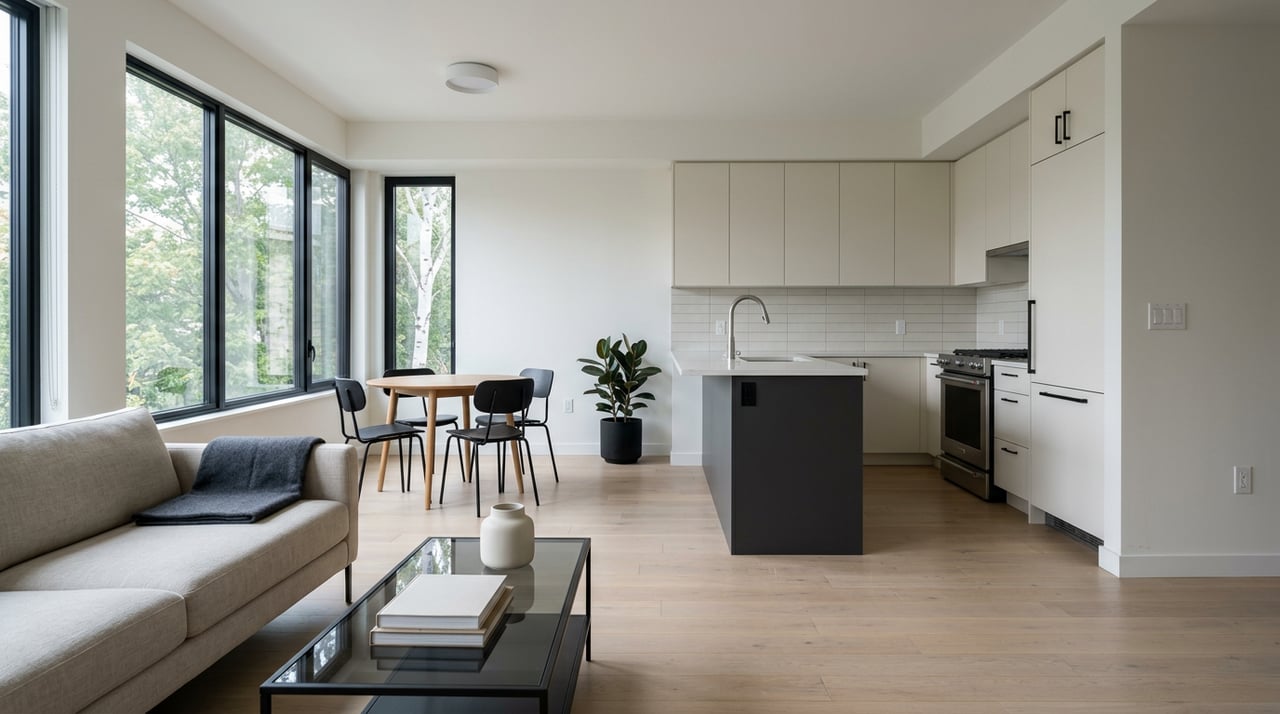
Trying to choose between a Madison condo and a starter home with a yard? You are not alone. Many first-time buyers compare the lower entry price of a condo to the flexibility of a house and wonder which option truly fits their budget and lifestyle. In this guide, you will see how prices, monthly costs, financing rules, and day-to-day living compare in Madison and Dane County so you can move forward with confidence. Let’s dive in.
Madison price gap at a glance
Recent local market snapshots show a clear price gap. Typical Madison-area condos often sell around the low $300Ks, while single-family homes in the city and across Dane County regularly land in the low to mid $400Ks. That gap is a big reason many first-time buyers start with condos.
Price tells only part of the story. HOA dues, property taxes, insurance, maintenance, and financing rules can narrow or widen the cost difference month to month. For the latest city and county medians, check recent MLS summaries and monthly snapshots from the South Central Wisconsin MLS (SCWMLS) so you are using current numbers for your search. You can review city and village year-end stats through the SCWMLS resource page for additional context: SCWMLS year-end statistics.
What your monthly cost includes
Your true monthly housing cost often includes:
- Mortgage principal and interest (varies by price, down payment, and rate)
- Property taxes (Dane County’s effective rates are commonly around 1.5% to 1.8% of value per year, but bills vary by municipality and assessment) (Tax Foundation overview)
- Homeowners insurance (HO-3 for a house; HO-6 for a condo) (HO-6 basics)
- HOA dues for condos and some townhomes (national average is in the low hundreds per month, and many Madison listings show roughly 200 to 500+ dollars depending on amenities and what utilities are included) (HOA fee context)
- Maintenance and repairs (condo owners handle interior items while the association covers most exterior items; single-family owners cover it all)
Worked example: costs side by side
Below is a simple, apples-to-apples way to compare a typical condo to a typical starter home. These are estimates for planning only. Your actual numbers will vary by property, tax bill, insurance quote, HOA, and maintenance history.
Assumptions for illustration:
- Condo price: 325,000 dollars. HOA: 300 dollars per month.
- Starter home price: 470,000 dollars.
- Property tax estimate: 1.6% of value per year for both examples, divided by 12 months.
- Insurance: note that condo HO-6 policies typically cost less than single-family HO-3 policies. For illustration only, add 45 dollars per month for condo HO-6, and get a real quote for a house policy in your ZIP code. (HO-6 basics)
- Maintenance: use the 1% per year rule of thumb for single-family homes; condo interior-only varies but is usually lower. (Maintenance rule of thumb)
Estimated non-mortgage monthly costs:
325,000 dollar condo
- Taxes: about 433 dollars per month (1.6% of 325,000 divided by 12)
- HOA: 300 dollars per month
- Insurance (HO-6, example only): 45 dollars per month
- Interior maintenance: varies by unit age and finishes
- Subtotal (before interior maintenance): about 778 dollars per month
470,000 dollar starter home
- Taxes: about 627 dollars per month (1.6% of 470,000 divided by 12)
- Insurance (HO-3): varies and is typically higher than HO-6
- Maintenance: about 392 dollars per month on average (1% rule)
- Subtotal (before homeowner insurance): about 1,019 dollars per month
Takeaway: A lower condo price can produce meaningful monthly savings, but HOA dues and condo-specific insurance still matter. Houses bring higher taxes on a larger purchase price plus ongoing exterior maintenance. Your mortgage payment will also differ because of the price gap, so have your lender run side-by-side scenarios for the exact homes you are considering.
Maintenance and insurance: who pays what
Condo associations typically carry a master insurance policy and manage a large share of exterior work. Homeowners cover everything on their lot. Use the table below as a quick guide, then confirm details in the condo documents for any unit you like.
| Item | Condo owner typically pays | Condo HOA typically pays | Single-family owner pays |
|---|---|---|---|
| Roof/siding/exterior | No (confirm docs) | Yes (most projects) | Yes |
| Landscaping/snow | No | Yes | Yes |
| Common areas/elevators | No | Yes | N/A |
| Building master insurance | No | Yes | N/A |
| Unit interior finishes | Yes | No | Yes |
| Personal property/liability | Yes (HO-6) | No | Yes (HO-3) |
- Ask the HOA what the master policy covers and whether it is bare walls, single-entity, or all-in. Your personal policy fills the gaps, and loss assessment coverage may be smart. Learn more about master policies here: HOA master policy basics.
Financing checks for condos
Condo loans come with extra project reviews. Before you fall in love with a unit, have your lender confirm if the building is considered warrantable under Fannie Mae and Freddie Mac standards. Non-warrantable condos can still be financed, but often with different terms. Start with these resources:
- What lenders look for: insurance, reserves, occupancy mix, litigation, commercial space, and more. Fannie Mae condo requirements
- Why reviews got tighter: agencies recently emphasized critical repairs and deferred maintenance when approving projects. Policy update overview
Quick condo financing checklist:
- Ask your lender to check the building’s warrantability early.
- Request HOA docs: current budget, reserve study, meeting minutes, insurance declarations, and any special assessments or litigation.
- Confirm the master policy type and deductible.
- If non-warrantable, review available loan options, down payment needs, and pricing.
Down payment help in Wisconsin
Many first-time buyers in Madison and Dane County use state housing finance options. WHEDA-backed mortgages can pair with down payment assistance for eligible buyers. Program rules, income limits, and purchase limits can change, so start with current information and a participating lender. Learn more here: WHEDA homebuyer programs.
HOA documents to review
When you consider a condo, budget time to read the association documents. These items help you understand both your monthly costs and possible future assessments:
- Master insurance policy type and deductible (policy overview)
- Current operating budget and reserve balance
- Most recent reserve study and planned capital projects
- Minutes from recent board meetings
- Rules on pets, rentals, renovations, parking, and storage
- Delinquency rates and any pending litigation
A well-funded, well-run association helps protect your investment and can support smoother resale later.
Lifestyle tradeoffs to consider
Condos can offer a prime location, lower entry price, and less exterior maintenance. If you want walkability and easy living, a condo may fit your routine. You trade private outdoor space for shared amenities and rules that protect the building.
Starter homes provide a yard, garage, and more control over renovations. If you enjoy projects or plan to expand, a house may be better. You take on full responsibility for exterior systems, landscaping, and snow removal in exchange for control and privacy.
Resale can be strong on both paths. Well-managed condo buildings with healthy reserves and favorable financing status often sell quickly in tight-supply areas. Many starter homes appeal to a broad buyer pool, which can help with liquidity. Your best indicator will be recent comparable sales near the specific property you like.
Look beyond Madison
If you want more space or a yard at a similar monthly cost, compare nearby communities in Dane County. Areas such as Sun Prairie, Fitchburg, Middleton, Verona, Waunakee, DeForest, Oregon, and Stoughton each offer different price points and amenities. Balance commute time, planned development, and property taxes with your budget and timeline.
How to decide now
Use this quick plan to get clarity fast:
- Set your monthly comfort number. Include mortgage estimate, taxes, insurance, HOA, and a maintenance line item.
- Get preapproved and ask your lender for a condo project review plan. Confirm warrantability early.
- Compare 2 to 3 condos and 2 to 3 starter homes using the same monthly cost worksheet.
- Read HOA documents and get insurance quotes for each finalist.
- Test the lifestyle. Drive the commute, check grocery and park access, and look at parking and storage for daily needs.
When you have real numbers and a clear picture of daily life, the right choice usually stands out.
If you would like a side-by-side worksheet with current Madison and Dane County comps, plus help reviewing HOA documents, reach out to Mary Ramsey. You will get clear guidance, responsive communication, and a step-by-step plan that fits your budget and goals.
FAQs
What is a typical Madison condo HOA fee?
- National data shows HOA fees often land in the low hundreds per month, and many Madison-area listings show roughly 200 to 500+ dollars depending on age, amenities, and whether utilities are included. See national context here: HOA fee overview.
How do Dane County property taxes affect condos vs houses?
- Effective tax rates in Dane County are commonly around 1.5% to 1.8% of assessed value per year, which means a higher-priced house usually carries a higher tax bill than a lower-priced condo. Always check the current parcel tax bill. Reference: Tax Foundation data.
What does condo insurance (HO-6) cover compared to a house policy?
- Condo HO-6 policies typically cover your interior finishes, personal property, and liability, while the association’s master policy covers common elements and building structure as defined. Homeowner HO-3 policies for houses cover the entire structure plus personal property and liability. Learn more about HO-6 and master policies: HO-6 basics and master policy types.
What makes a condo non-warrantable and why does it matter?
- Issues like low reserves, high investor ownership, litigation, or significant deferred maintenance can affect condo project approval. Non-warrantable condos may require different loan products, down payments, or rates. See Fannie Mae condo requirements and this policy update overview.
Can I use WHEDA down payment assistance for a condo or a house in Madison?
- Many buyers can use WHEDA-backed loans and down payment assistance for both condos and single-family homes if the property and borrower meet program rules. Check current offerings and limits here: WHEDA programs.
How should I estimate home maintenance in Madison’s climate?
- A common planning rule is 1% of the home’s value per year, or about 1 dollar per square foot per year, adjusted for age and condition. Older or larger homes may require more. Context: Maintenance rule of thumb.
